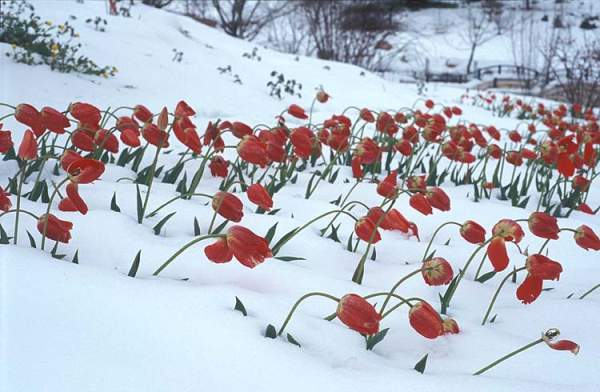
Seasonal colour

tulips-in-the-snow

The aesthetics and perfume of flowers have always attracted…however I know little about the cultivation of plants. [http://freshpalette.blogspot.com/2009/03/tulips.html] So I will indulge in some self-education in an attempt to at least improve my awareness and save myself from future embarrassment.

The results of my research:

1) Tulips are one of the earliest flowers to bud. Because they appear while there is still snow cover, spring flowering bulbs are used to varying temperatures and will grow in spurts. http://www.squidoo.com/tulip-flowers

2) The majority of tulips are not scented, but those that are scented have caused unexpected delight. http://www.finegardening.com/plants/articles/sweetly-scented-tulips.aspx

3) Variegation in tulips are cause by a fungal infection! http://science.howstuffworks.com/flowering-plants/tulip-info.htm

5) Successful planting is like dance choreography! http://www.bulb.com/templates/dispatcher.asp?page_id=21651

6) Tulip fields make striking environmental art! Perhaps even offer the perfect opportunity to propose…. http://www.environmentalgraffiti.com/featured/tulip-fields-modern-art/12899

7) The first tulip festival was said to have taken place in Turkey during full moon with guests dressed in colours to harmonise with the flowers. http://www.finegardening.com/plants/articles/sweetly-scented-tulips.aspx

8) Tulips grow in the alpine region of Kyrgyzstan. http://www.advantour.com/kyrgyzstan/flora-fauna.htm 
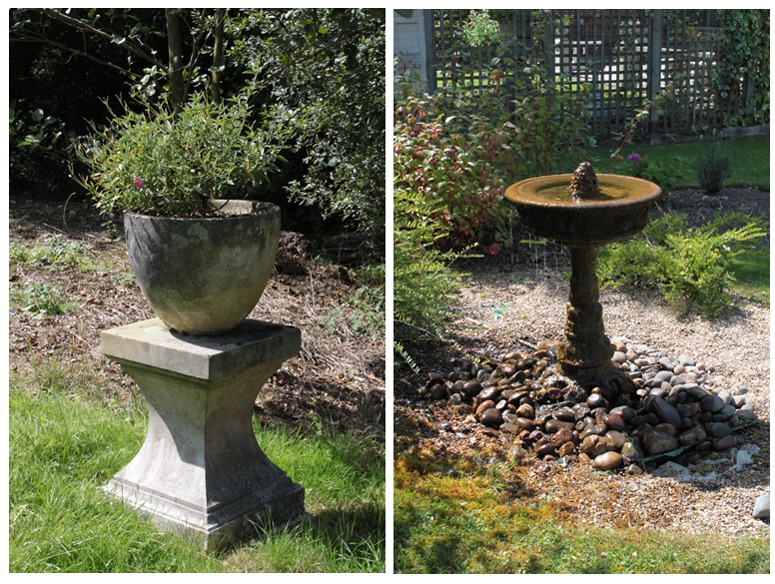
Reconstituted stone garden ornament

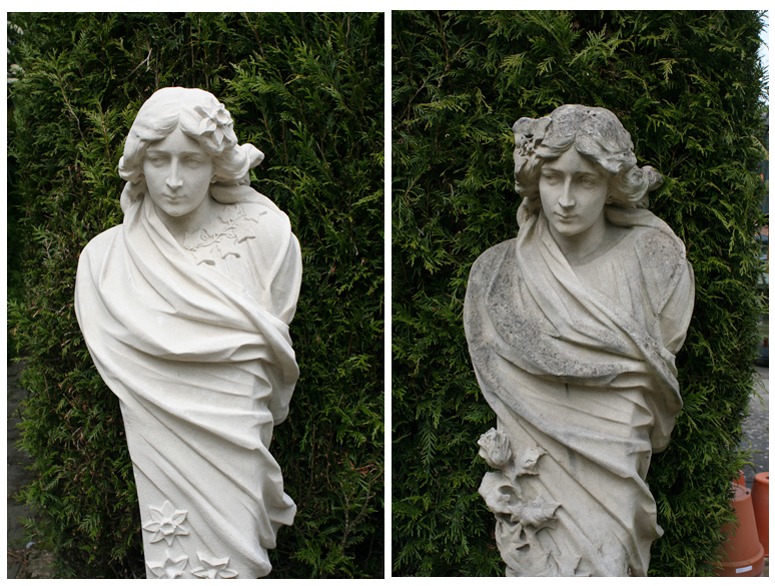
Reconstituted stone garden ornaments develop a patina which depends on where they are placed

Reconstituted stone garden ornaments develop a patina which depends on where they are placed

Most of the ‘concrete ornaments’ in garden stores are vile, some more reminiscent of a stained WC pan than of a stone garden ornament. But there are some notable exceptions and the best quality products we know of are made by Chilstone. The company explains that each ornament ‘is handmade in reconstituted stone by a special process, developed over our long history to ensure a finished texture virtually indistinghishable from natural stone’. They specialize in making accurate copies of antique originals. Mosses and lichens grow well on the products and the species which flourish depend entirely on the local environmental conditions (shade, sun, moisture etc) so that they become INDISTINGHISHABLE from natural stone ornaments. The ingredients are crushed stone and a binder – with no use of the sand or aggregate normally used in making concrete. The ornaments are not very cheap but they are very good, so that many Chilstone items have been sold at Sotheby’s for many times their original retail price. You can think of them as an investment!

Reconstituted stone: freshly cast (left) and in the early stages of developing a patina (right)

Reconstituted stone: freshly cast (left) and in the early stages of developing a patina (right)

Heavy and light H2O

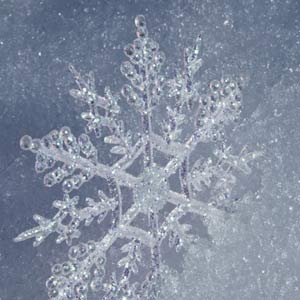
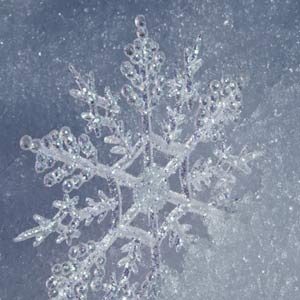
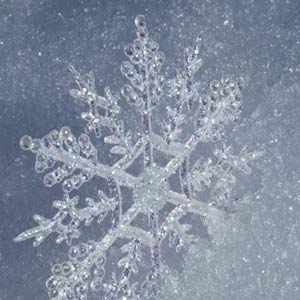
snowflake3According to Richard Alley in The Two Mile Time Machine ‘heavy’ water is rare (for every 6,000 parts of water, there is only one part that is heavy water.)

Rain and snowflakes are formed from water vapour from the heavier isotopes of H2O. Water has an atomic weight of between 18 to 22.

Not being all that knowledgeable about snow, a little reading turned up some interesting facts I thought I would share;

“What are common snowflake shapes?

Generally, six-sided hexagonal crystals are shaped in high clouds; needles or flat six-sided crystals are shaped in middle height clouds; and a wide variety of six-sided shapes are formed in low clouds. Colder temperatures produce snowflakes with sharper tips on the sides of the crystals and may lead to branching of the snowflake arms (dendrites). Snowflakes that grow under warmer conditions grow more slowly, resulting in smoother, less intricate shapes.


  • 32-25° F – Thin hexagonal plates
  • 25-21° F – Needles
  • 21-14° F – Hollow columns
  • 14-10° F – Sector plates (hexagons with indentations)
  • 10-3° F – Dendrites (lacy hexagonal shapes)”

Source: http://chemistry.about.com/od/moleculescompounds/a/snowflake.htm

I don’t believe I am any more able to identify the temperature at which the pictured snowflake was formed. Perhaps someone could help me out? If identifying snowflake temperature is good fun, here are some more from [Alaska…http://www.andysorensen.com/Nature/Snowflakes/Alaska-Snowflake-Photos-1/2309403_oBP6E#120860351_Zvrth]

So to get to the crux of things – is snow flake biodiversity endangered by global warming?

Pioneering spirit

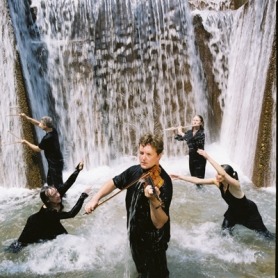
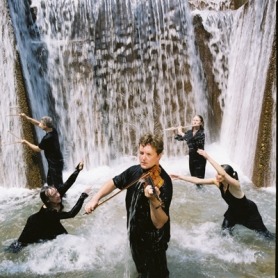
landscape-and-dance1It is said that the landscape architect Lawerence Halprin “worked closely with his wife, whose experiments with movement – in conjunction with a circle of avant-garde composers – informed his user-friendly designs.”

Halprin was keen to design participatory spaces rather than spaces that were merely aesthetic.

It is surprising, given his background was in plant sciences and horticulture before studying landscape architecture at Harvard, that he is best known for his work on public spaces. Although it is possible to surmise that his formative architectural interests and Bauhaus teachers influenced his sense of formal spatial design.  

http://www.portlandtribune.com/features/story.php?story_id=122098201532999900 and http://www.artscatter.com/general/deep-portland-history-lawrence-halprin-and-ira-keller/ and http://www.tclf.org/pioneers/profiles/halprin/index.htm

New ways of seeing

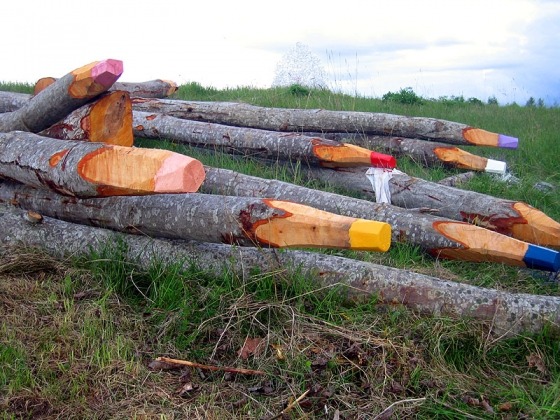
colourpensils1Environmental art is incredible for its ability to enable us to perceive the everyday in new ways. Art is also often a useful design tool because it assists us to describe an aspect of seeing which is otherwise difficult to illustrate.

Garden design, while sometimes surprising, usually aims at a form of contemplative delight in which our senses come to a point of rest. In Japanese garden design the concept of Ma (space) is important.

Boye de Mente in Elements of Japanese Design: Key Terms for Understanding and Using Japan’s Wabi-Sabi-Shubui  Concepts (p43) describes the concept of Ma;

“Ma uses space as well as time and refers to the space time between events. It is space that is sensually as well as intellectually perceived. In the Japanese concept of things, ma gets your attention and directs your mind or thoughts along specific paths that lead to some kind of conclusion or pleasant feeling. “

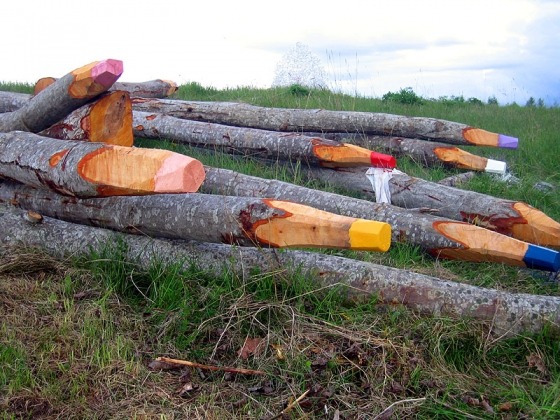
Environmental art plays with the unexpected juxtaposition of the familiar and the unfamiliar to challenge our usual point of view. While illustrating, I believe, the Japanese concept of Ma this Finnish composition entitled coloured pencils has us consider our perceptions of our place and role in the world;

“finnish environmental landscape art challenges us to ponder

who we are, where we belong & what our place is

in the great universal cycle”

Source: http://oliveloafdesign.wordpress.com/2008/11/10/