Landscape architecture as stewardship of the land

The American Society of Landscape Architects (ASLA) states that “Landscape architecture encompasses the analysis, planning, design, management, and stewardship of the natural and built environments.” For me, there are two problems with this as a definition of landscape architecture: (1) ‘encompasses’ is a weak term – I would prefer a definition of landscape architecture (2) I feel uneasy with the term ‘stewardship’, possibly because my peasant ancestors suffered at the hands of harsh stewards employed by bullying barons.

In an interesting article on Steward Leadership in the Public Sector, Marilyn J. Smith writes that “The Merriam-Webster Dictionary defines stewardship as, “the conducting, supervising, or managing of something: Especially the careful and responsible management of something entrusted to one’s care” (Merriam-Webster, Inc. 1999). For Christians, stewardship began when God gave Adam dominion over the Garden of Eden. Even prior to the Bible, the ancient Greeks, Buddha, and Lao Tqu articulated the same concept (Spears, 1998: pp. 162-3).”   Her comment is well-intentioned but deepens my uneasiness (1) I do not see landscape architecture as an essentially public sector activity (2) I can’t help remembering Ian McHarg’s  comment on the Book of Genesis that ‘If you want to find one text which if believed and employed literally, or simply accepted implicitly, without the theological origins being known, will explain all of the destruction and all of the despoliation accomplished by Western man for at least these 2,000 years, then you do not have to look any further than this ghastly, calamitous text.’

See also: definitions of landscape architecture
French Impressionist painting and English planting design

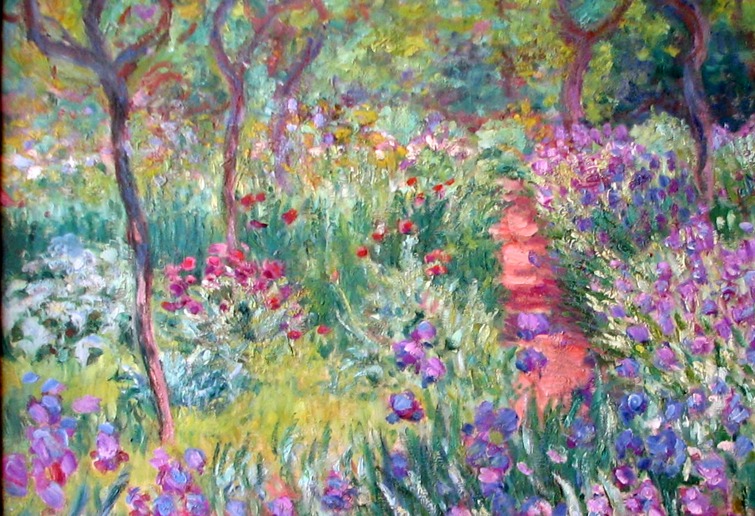
monet_artist_gardenChristine’s question about the influence of French Impressionist painting on the art of garden design has set me thinking. Since writing an essay about Gertrude Jekyll, at college in 1969, I have argued that the painter who most influenced Gertrude Jekyll’s style of planting design was J M W Turner. I still think this is correct but the following comment from Colour Schemes for the Flower Garden has been extremely influential. Jekyll wrote that planting design  is ‘like having a box of paints from the best colourman, or, to go one step further, it is like having portions of these paints set out upon a palette.’ Once you start thinking about plants as ‘a palette’ of colours, you are on the high road to English Impressionist Planting Design. Monet’s own garden at Giverny was not planted impressionistically but his paintings of the garden are in an impressionist style and, curiously, photographs of the Water Lily Pond at Giverny also have an impressionist character.


Definition of a sustainable urban landscape

I  came across this definition today, from a large UK landscape practice: “a sustainable urban landscape achieves the correct balance between environmental, economic and social needs” and regret that it is not helpful. It does not tell us how to find a ‘balance’ and it implies that landscape architects, assuming they are to be involved, have some kind of knowledge, skill or training which lets them decide what is ‘correct’.  A much better definition is required if we are to have better designs for sustainable landscapes.

Sissinghurst garden farm news

As guessed, the rumpus was a publicity stunt exercise in TV dramatics. The BBC and the National Trust knew when they were planning the TV series on Sissinghurst that  Adam Nicholson and Sarah Raven’s ideas were going to be accepted.  So in Episode 8 of the longest-running docudrama in the first 5,000 years of garden history, we saw some of the farm land being used to grow vegetables and Sly Steve in the kitchen admitting that Sarah’s Moroccan Lamb had been popular with the guests. http://www.bbc.co.uk/iplayer/episode/b00jclx2/Sissinghurst_Episode_8/ Adam shoehorned in a final attempt to make Sissinghurst into the World’s Lesbian Capital or, at least, the World’s Sexiest Garden (with the line “Harold Nicholson loved Morocco more than any place on earth. He often had an affair there”). Adam Nicholson also remarked that “Writing is the family business. Butchers chop up pigs. We write books.” Nicely put, but was he laying a foundation for a new family business: TV? Watch this space.

PS Why does the National Trust want publicity for Sissinghurst? To attract more visitors and to have more money to spend. But to conserve the garden’s character it needs less publicity and fewer visitors.

Asian landscape architecture and garden design in the twentieth century

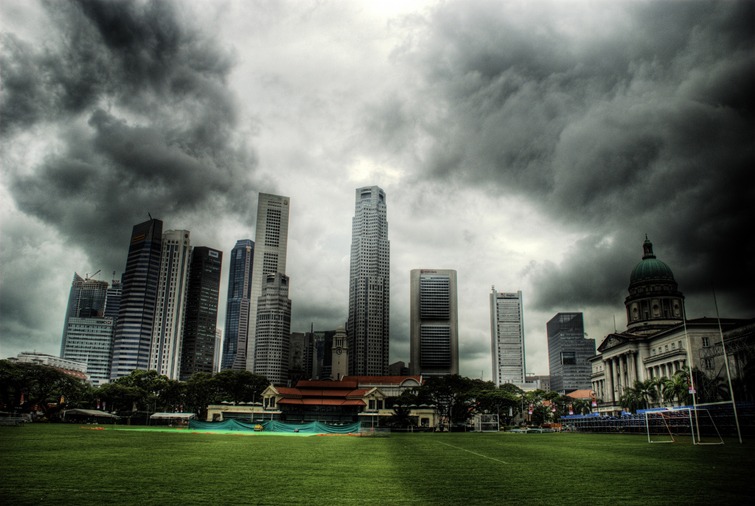
Singapore skyline by Gyver Chang

Singapore skyline by Gyver Chang


Why were Asian garden design and landscape architecture such a disappointment in the twentieth century? There is much work which looks anti-ecological, anti-contextual, almost anti-human – and far too American or far too European (see note on Chinese context theory). Luckily, there are some exceptions, including the twenty-first century landscape designs for  King Abdullah International Gardens and the Abu Dhabi Corniche. Instead of writing an essay (which is is in fact what I have done for the final chapter of Asian gardens) I offer the short statement that the problems with Asian garden and landscape design in the 20th century resulted from a poor understanding of design history and theory. There were lacks of appreciation:

  1. by many landscape architects that their profession’s design theory was at least 4000 years old on 14  May 1863 ( Norman T Newton gives this day as ‘the first official use of the title Landscape Architect’ – he knew the art was older but his perception of the theory was post-1863)
  2. by the Asian clients and designers who believed Asia should be ‘modernized’ by being ‘westernized’
  3. by the World Bank and associated development agencies which were certain that western is better, because it is based on science , and because science is the ultimate criterion of truth
  4. by a host of architects, engineers and planners who believed too fervently in ‘master planning’ and therefore fostered the tragedy of feminine design
  5. by bankers and property developers who believed that calculation of short term profit was the way to distinguish good projects from bad projects
  6. by the abstract and anti-contextual nature of international modern design theory
  7. by an inadequate knowledge of Asian design history and theory

The corrective to these Seven Deadly Design Sins should be gulping that wonderful Asian virtue – HARMONY.  History matters, theory matters, science matters, beliefs matter, profit matters,  ecology matters, design matters, people matter -we all matter!

See also: Previous post on Asian gardens and landscapes

Chinese landscape architecture competition for Tiananman Square

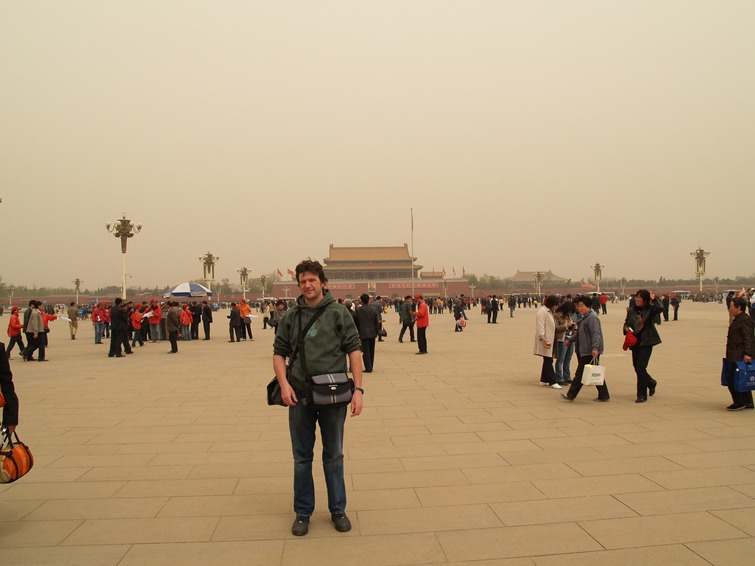
Tripper54 put this on Flickr with the caption 'me at tiananmen square'

Tripper54 put this on Flickr with the caption 'me at tiananmen square'

The landscape architecture profession in China has grown rapidly but now faces a supreme challenge: how to re-design  Tiananmen Square.  Though understandable, Tiananmen Square was a blunder and this should be recognized. Only then can it become the brilliant centre of world culture which Beijing deserves. Its current design is understandable for three reasons:

  1. China had no tradition of creating public open space in towns  at the time it was designed and nor did it have a  landscape architecture profession
  2. The design inspiration for Tiananmen Square came from Soviet Russia, which could just as well have taught lessons in running fair trials
  3. As the capital of the world’s most populous country, the Beijing authorities wanted to have the world’s largest and greatest urban square

The present landscape design of Tiananmen Square is regrettable  for three reasons:

  1. the section of the Ming capital it replaced should most certainly have been conserved
  2. the landscape design of the new square was horrific: it has scarcely any use, scarcely any beauty, and is totally unsuited to Beijing’s climate. People just stand around with nothing to do but take ‘I was there’ photographs of each other.
  3. the tragic events of  1989 are, one assumes, as much regretted in Beijing as they are in the rest of the world

So what should be done? It is loved as the heart of the nation and I can’t say – but finding an answer is a great challenge for the landscape architecture profession, hence the  Web 2.0 Landscape Competition announced today. + more information on the Tiananmen landscape architecture competition (and a October 2009  blog post about the competition)

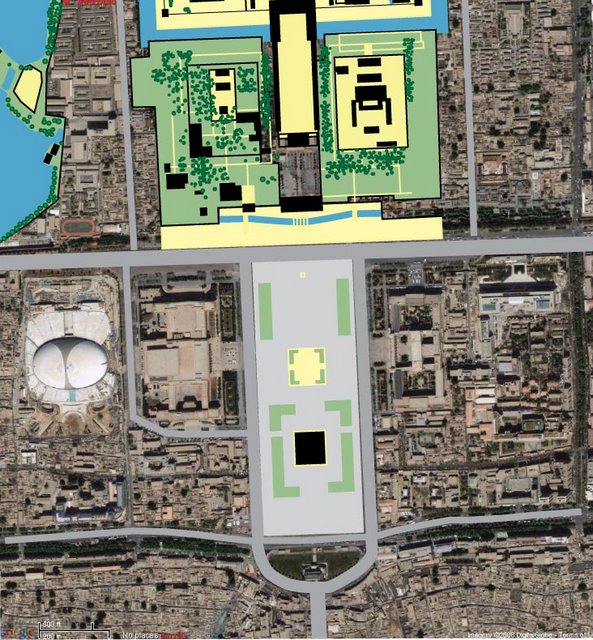
The grey slabbed area is the famous Tiananmen Square in Beijing

The grey slabbed area is the famous Tiananmen Square in Beijing

See also:  Previous post on Asian gardens and landscapes