Sparking the imagination

city visualisation by concept artist mark goernerCity visualisation by concept artist: markgoerner
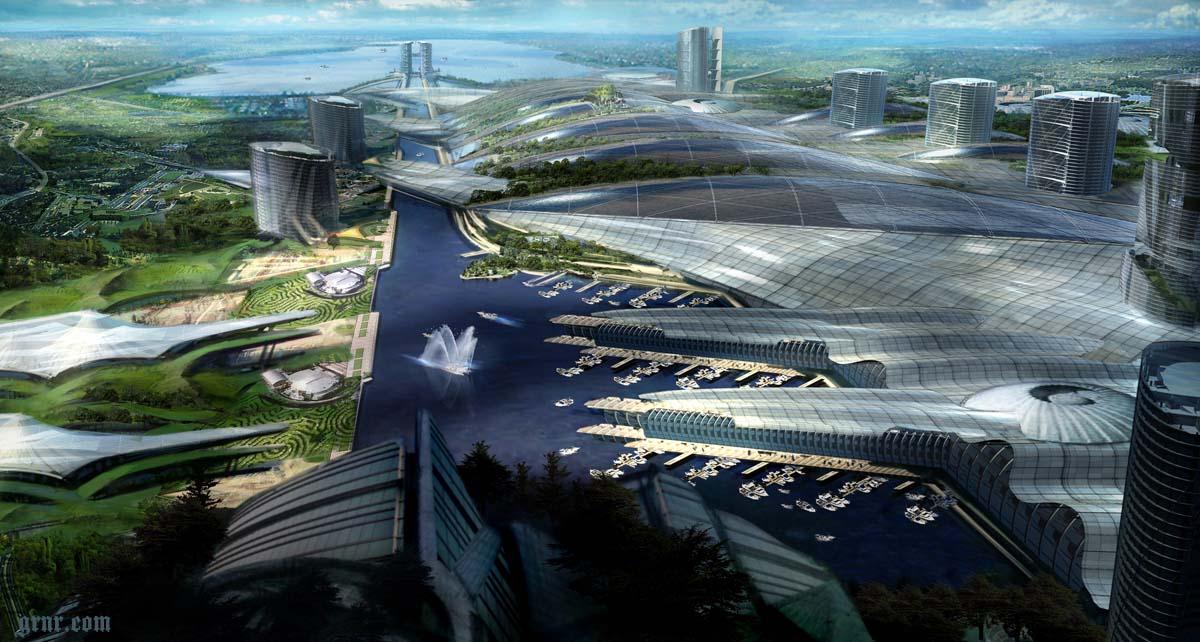
The visualisation shown is by conceptual artist Mark Goerner. It would be interesting to surmise what premises might underlie this vision of a possible ‘future’ city? Although Mark is neither an architect or a landscape architect he has produced a vision of a probable reality that both architects and landscape architects can recognise and respond to.
I sent this picture to Tom after realizing I had confused the terms ‘aspect’ and ‘prospect’ in my previous comments [see where is this landscape?]. Tom sent through links to Repton’s discussion of aspect and prospect and Loudon’s response.
Perhaps the oversight (in not first checking terms) leading to this discussion is more valuable than I first realised. It is unfortuneately relatively common in architecture to deal with issues of sustainability by modifying climatic effects using techonology (green or otherwise), often without first having planned the use, proximity and orientation of spaces in an iterative manner. [In this discussion also no regard has been given to topographic (and other) concerns ie. founding materials, volumes and degree of incline etc on the arrangement of space.] This way of proceeding, if Repton’s comments are anything to go by, is hardly new. And, if Loudon’s response is correct (and I believe it is), this oversight is a constant source of chargin to architect’s who seek to optimise (the positive) and minimise (the negative) by design.
Prospect is an essential part of the visual experience of a building from the interior; as much as it is an essential part of the visual setting (perhaps approach…but not always) of a building. Aspect is essential to the bodily experience of a building from the interior; as much as it contributes to how the building and landscape meld in harmony to form a composite at a myriad of viewpoints and scales.
Where might this city most probably be located? Why is it situated and arranged in the way that it is? What is the relationship of built form to landscape? What sort of a place would it be to live in? Is it a sustainable city?
What is the future direction of garden design?

Where should we look to find a welcome future direction for the art of garden design? Chelsea? Kyoto? California? Australia? Saudi Arabia? Wales? A candidate list is, please don’t laugh, in Wales. It was made by the Centre for Alternative Technology CAT.

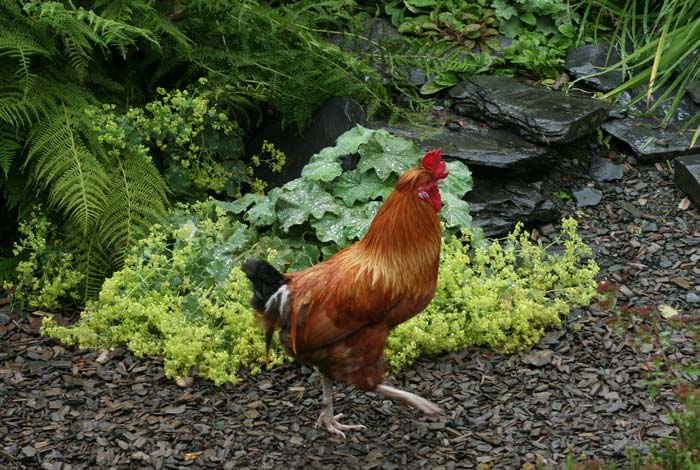
Local slate and a local chicken

Local slate and a local chicken

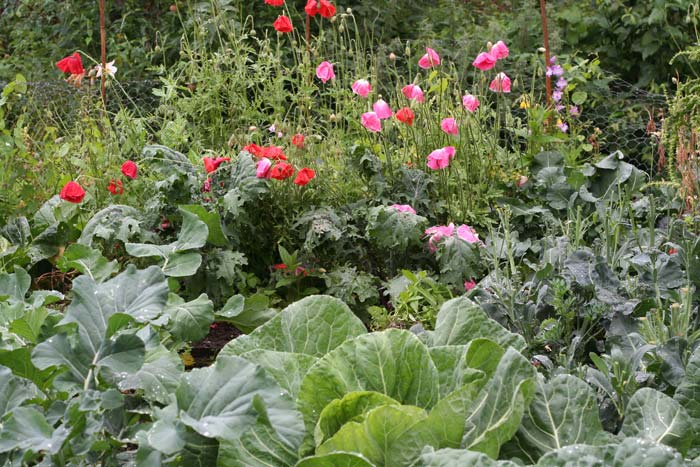
Food being grown amongst flowers

Food being grown amongst flowers


They are muddled in some respects, including the design of a Japanese-ey Bridge, but they are surely right about three things:

  • they place a great emphasis on the use of local materials. In a famous slate-quarrying region, slate is used in the CAT garden as a building material and as a paving material. This is a welcome contribution to the Great Cause of context-sensitive garden design. If gardens are made with standard ‘garden centre’ products they will not have local character
  • CATare experimenting with the re-combination of food plants with beautiful plants  in gardens. This is how gardens always used to be made. The idea of having separate ‘aesthetic’ and ‘vegetable’ zones in garden began with the renaissance
  • CAT also have chickens at loose in the garden. They are ornamental and they lay better eggs than anything ever sold in a supermarket.

I would like to see CAT take these principles to the Chelsea Flower Show – and employ a really talented designer to explore and publicize them.

Dispersal of Landscape Institute Library and Archive

The UK Landscape Institute announced today that it has decided to sack its archivist (and four others), close the LI library archive and seek ‘a new home for the collections’. What a terrible shame. The old idea was that when you have only one loaf of bread left in the world you should sell half of it and buy a book. Or, if one is not quite so hard hit by the credit crunch, one should follow the Chinese proverb: ‘When you have only two pennies left in the world, buy a loaf of bread with one, and a lily with the other’.

One really wonders why a professional institute should employ 26 staff and yet can’t maintain a library or publish any useful policies to support its members. Whose interests are being served?

Where is this 'urban landscape'?


Originally uploaded by jonrawlinson

Los Angeles? Chicago? Beijing? Delhi? Ankara? Sydney? No: it is a view of Riyadh, in Saudi Arabia, from the Al Faisaliyah Center.
What a wasted opportunity. With so much faith, so much central power and so much wealth…. the designed urban ‘landscape’ could have been so very much better. Even now, they should commission a Strategic Urban Landscape Plan for the city – after running a multi-stage competition to select the best firm.
Although I rather admire the Saudi policy of not issuing tourist visas, it has prevented me from visiting the Kingdom to see if the landscape planning as quite as bad as it appears from this and other photographs. They could have had a landscape plan which was sensitive to:

  • Islam
  • Climate
  • Materials
  • Social Customs
  • Hydrology
  • Ecology
  • Etc

What’s more, it would have helped create a more-sustainable landscape in preparation for when Saudi Arabia’s water and oil have been depleted. Both are ‘quarried’ on a non-renewable basis.

The Garden of Eden

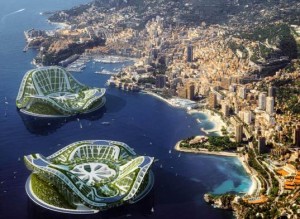
Christine’s post on the Lilypad Islands have a Garden of Eden quality. Vincent Callebaut propose a New Eden for us to inhabit when we have finished wrecking the Earth. The Lilypad Islands remind me what an excellent idea cruise ships are for other people’s holidays. Providing there is no pollution, just think how much better the all the world’s coasts would be if all the holidaymakers could be moved offshore.

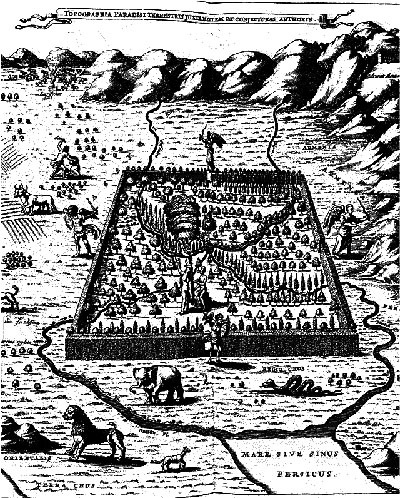
Athanasius Kircher’s drawing ( 1675) shows the Garden of Eden between the Tigris and Euphrates, west of the Persian/Arabian Gulf. He shows the Tree of Knowledge of Good and Evil, four angels guarding the gates and Cain killing Abel in the top-left corner. Majority opinion amongst modern commentators favours Kircher’s location of the Garden of Eden in Southern Iraq, but there are many competing theories.

Floating with the Tide


Vincent Callebaut Architectures has an innovative and evocative conceptual solution to the problems of climate change and land use! These lilypad like structures inspired by the giant Amazonian lilypad are floating zero emission cities complete with mountains, aqua culture fields, central park, suspended kitchen gardens and rivers.
[Image courtesy http://vincent.callebaut.org/]