Landscape architecture and urban design

A friend with enviable portfolio of major projects, says that ‘We have to call ourselves urban designers to get the work. But we have to employ landscape architects to get the work done’. Another friend who spent many years teaching urban design to architects, planners and landscape architects remarks that ‘the landscape architects were the best’. 

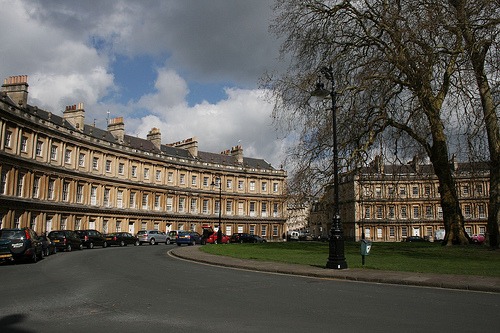
The Circus in Bath (UK) is a fine example of architecture+landscape but the idea (from John Wood) was of course inspired by Bramham Park (photograph of The Circus courtesy Casey Picker).

One can easily understand why the name ‘landscape architect’ is such a non-starter for clients. Most of them think landscape architects must either be garden contractors or the  artistic inheritors of Capability Brown. So why should they be so good at urban design? I think it is because they are trained to think about SPACE rather than about the OBJECTS WHICH CONTAIN AND DEFINE SPACE (buildings, walls, trees, mounds etc).  In urban design it is good practice to think about what type of space is required BEFORE thinking about what elements can be used to contain and define the space. As Laozi wrote:

Thirty spokes share a single hub,
And the central void makes the cartwheel useful.
Clay is moulded into a vessel,
And the empty space makes it valuable.
Doors and windows are cut out in the walls,
And these openings make the room livable.

Were Laozi to visit Bath he might comment that:

The central void makes The Circus useful.
Buildings are moulded into a vessel. 

Or would he have noted that The Circus is more Visual Space than Social Space and remarked  that landscape+architecture= urban design?

Ginkgo avenue in Japanese Meiji Shrine garden

This brilliant photograph, by Masahiro Hayata, combines the spiritual glory of a gothic vault with the transcendent luminance of a stained glass window.

The avenue is formed with the oldest surviving tree species on earth, the only survivor from prehistoric times. The Ginkgo was widespread 270 million years ago but disappeared – except from a small area in Central China. The seed was taken to Europe, from a Japanese temple garden, by Engelbert Kaempfer in 1692. Kaempfer  was a German naturalist, traveller and physician who wrote an important account of Japan and also made the first accurate drawings of Persian gardens.

The 300m Ginkgo Avenue is in the garden of the Meiji Jingu (shrine) in Tokyo. It commemorates the 1867 Meiji Restoration, which led directly to the astonishing modernization of Japan: the landscape architecture of this photograph involves many interests.

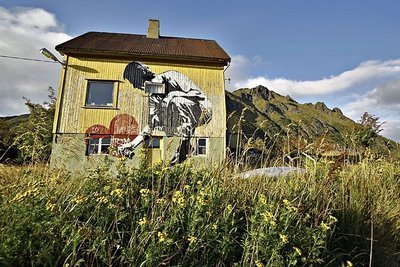
rural graffiti

and graffiti doesnt have to be urban


( i got these images from pic-tures blogspot, but cant seem to find it any more to add the link. i keep getting redirected to this taiwanese blog! anyway, i’ll put up more images if anyone wants to see them )

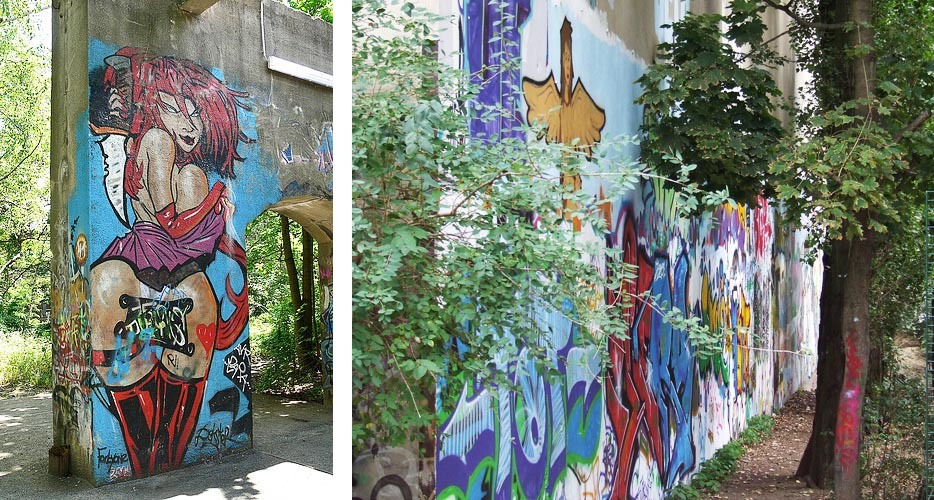
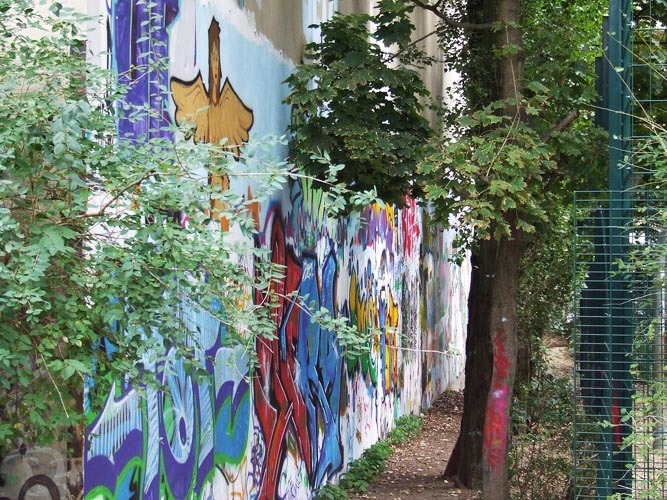
Graffiti in Berlin park design

Berlin has more of a graffiti ‘problem’ than London. So much of the city is so dull that local artists are taking the problem into their own hands. But look at this: Sudgelande Natur Park, along with many other intelligent uses of public art, has let local artists adorn the ugly hunks of concrete left by engineers and architects. [Images courtesy Olivier Six and Jens Uwe Liepelt]

We are grateful to Grün Berlin for the recently uploaded photographs of Sudgelande are also pleased to have a Head Gardener’s Comment. We look forward to having Visitor Comments and  Head Gardener’s comments throughout our Garden Finder Section. It had details of 2,440 gardens on 10th December and has 2,442 places on 11th December. New entries are always welcome and we worry that some countries (eg Israel) are seriously under-represented.

Cornwall gardens, hotels and tours


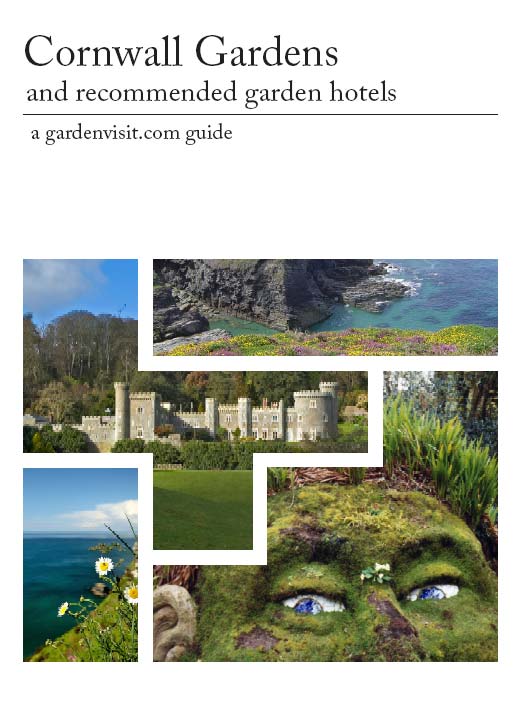
Cornwall Gardens and Recommended Garden Hotels eBook

Cornwall Gardens and Recommended Garden Hotels eBook

Only 12 days until the winter solstice: its time to be thinking about next year’s garden tours!

While planning a Cornwall garden tour, we produced an eBook on the subject. It is available for free download from our Gardens in Cornwall page. If any readers have further suggestions on where to go and which hotels have good gardens, please add a comment below! We would be pleased to include the information in a revised edition of the Cornwall Gardens eBook.

The eBook has information on eight top Cornwall Gardens – and also John Claudius London’s notes on his 1842 Cornwall Garden Tour. He was very ill and only spent a few days in the Duchy but his remarks are of considerable historic interest. Loudon was the most prolific garden writer who ever lived and perhaps the only polymath to take on the subject.

See also: Garden Tours in Cornwall.


Graffiti in the garden

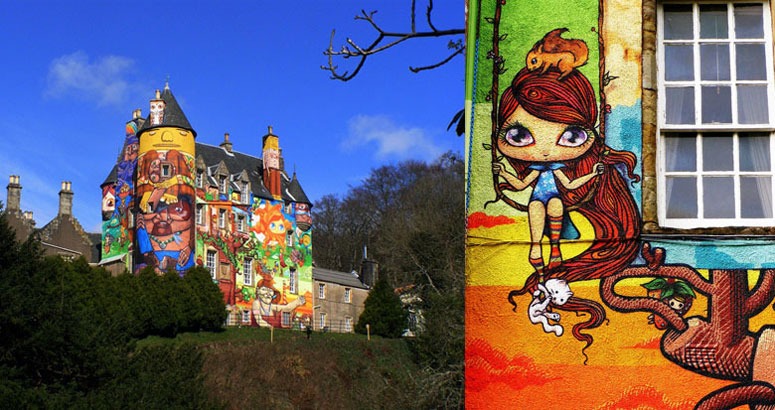
Kelburn Castle. Images by flickr user guinavere.

Kelburn Castle. Images by flickr user guinavere.


My local council detests graffiti artists. A rapid response team in CBRN Suits (chemical, biological, radiological and nuclear) soon arrives with tanks of noxious chemicals. Understandably, allowing citizens to paint wherever they wish without permission is an unworkable situation and definitely not one I am going to argue for.

However, sometimes I feel too little thought is put into whether the environment has actually been improved with the odd dash of new paint here and there. So, I was delighted to find a more-enlightened attitude on the Glasgow Riviera. Kelburn Castle has been in our Garden Finder for ages, without being on many people’s must-see garden lists for Scotland. Then they employed Brazilian Graffiti artists for a paint job. Now it’s a real spectacle. On cold winter days Kelburn blazes on the landscape as though on fire.

Is it Art? Or should someone call the CBRN guys as soon as possible? Peronally, I love it.